The Consumer-Owner Inversion
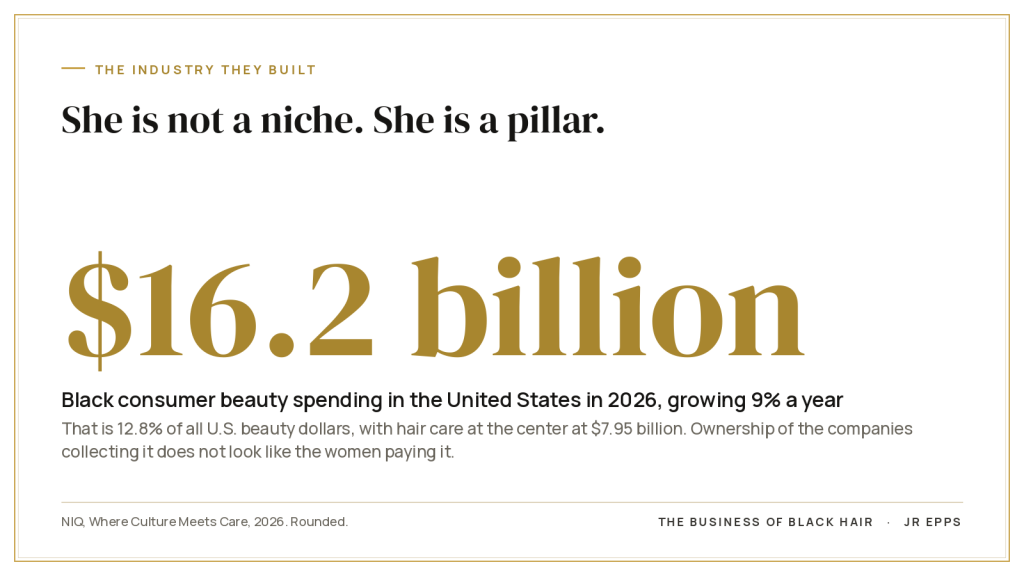
Black consumers spend $16.2 billion a year on beauty and own almost none of the companies that collect it. The book calls that arrangement by its name.
ReadArticles about The Business of Black Hair
Black consumers spend $16.2 billion a year on beauty and own almost none of the companies that collect it. The book calls that arrangement by its name.
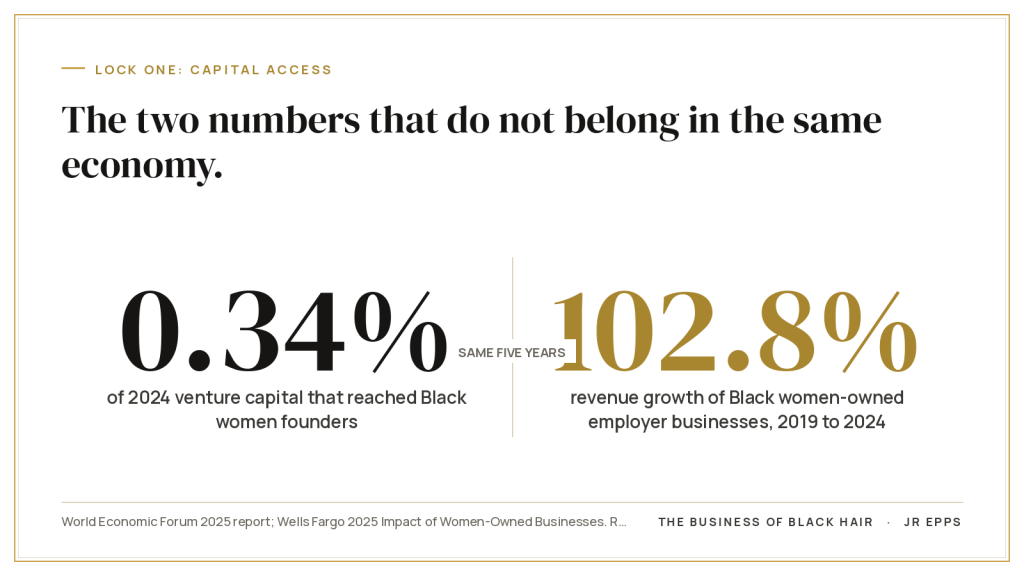
ReadBlack women founders received a third of one percent of venture capital in 2024. Their employer businesses doubled revenue in five years anyway. That is not a diversity story. It is a market inefficiency.
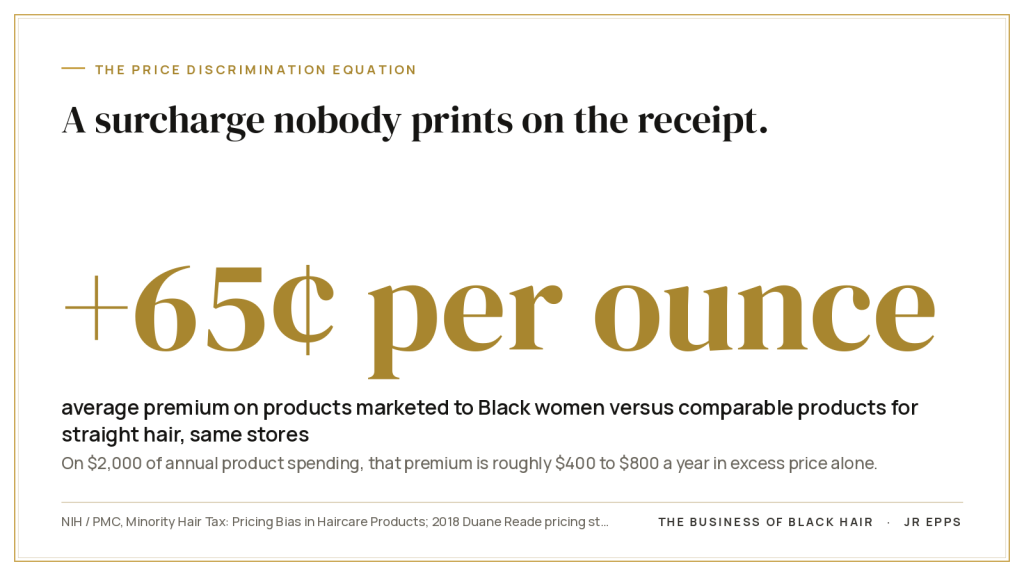
ReadProducts marketed to Black women cost about 65 cents more per ounce than comparable products on the same shelf. On a normal year of product spending that is $400 to $800 that never shows up as a line item.
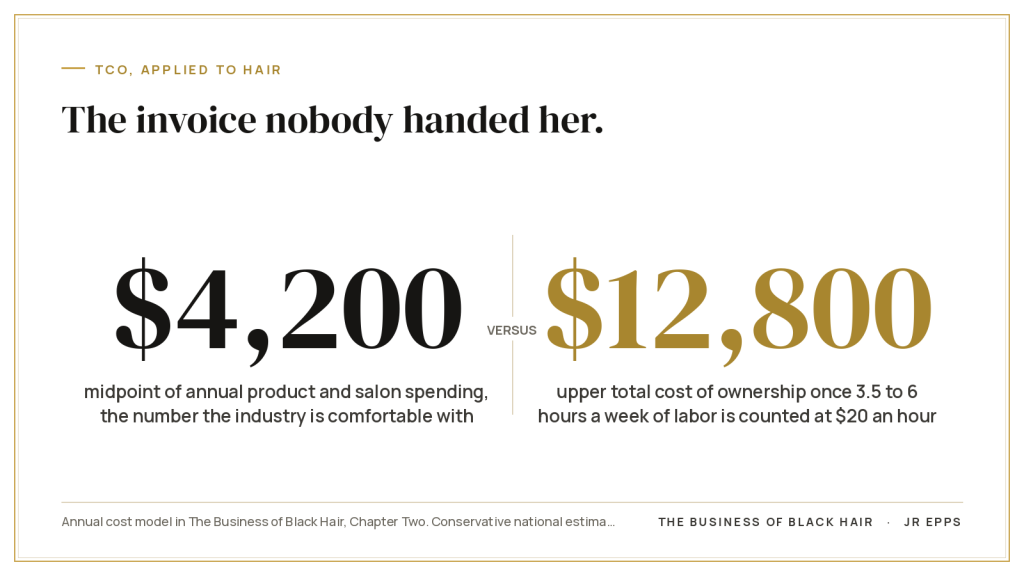
ReadNobody quotes a server by its sticker price. You quote the total cost of ownership. Run the same math on Black hair and the $4,200 a year the industry talks about becomes $12,800.
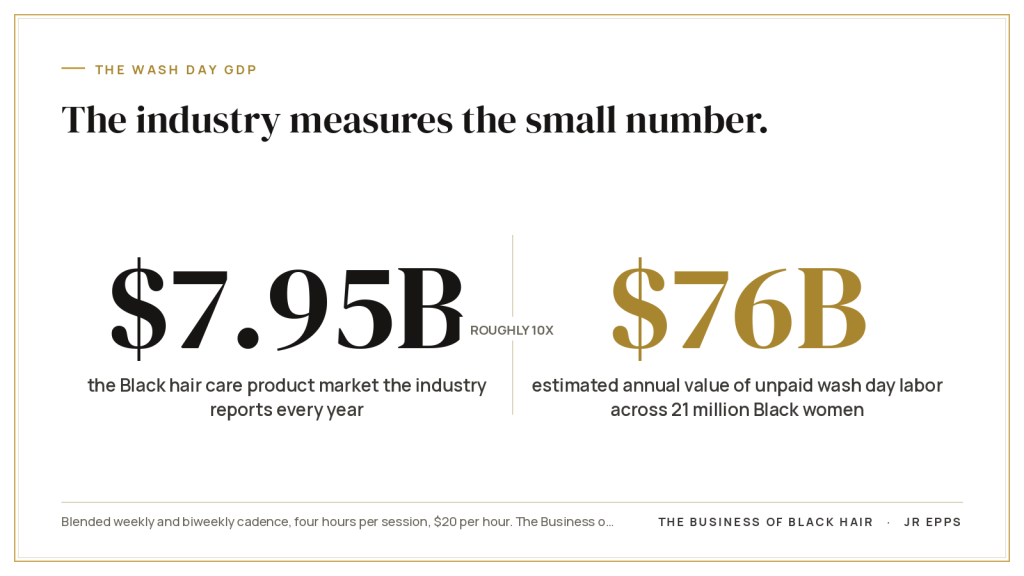
ReadThe product market the industry reports is $7.95 billion. The unpaid skilled labor that makes those products work is about ten times that, and it appears on no balance sheet.
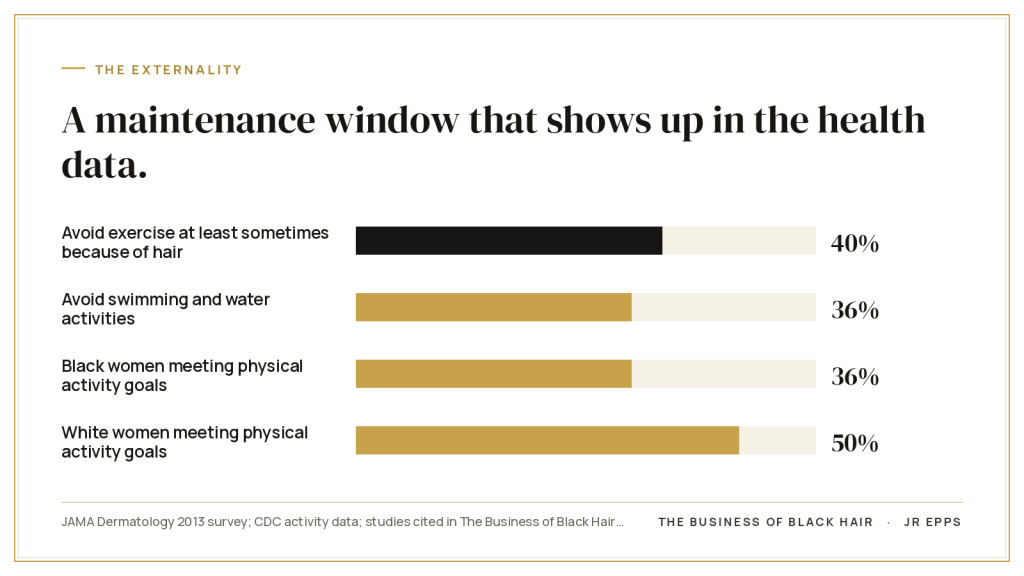
ReadBetween 38 and 48 percent of Black women say they avoid or change physical activity because of their hair. That is a product maintenance schedule showing up in public health data.
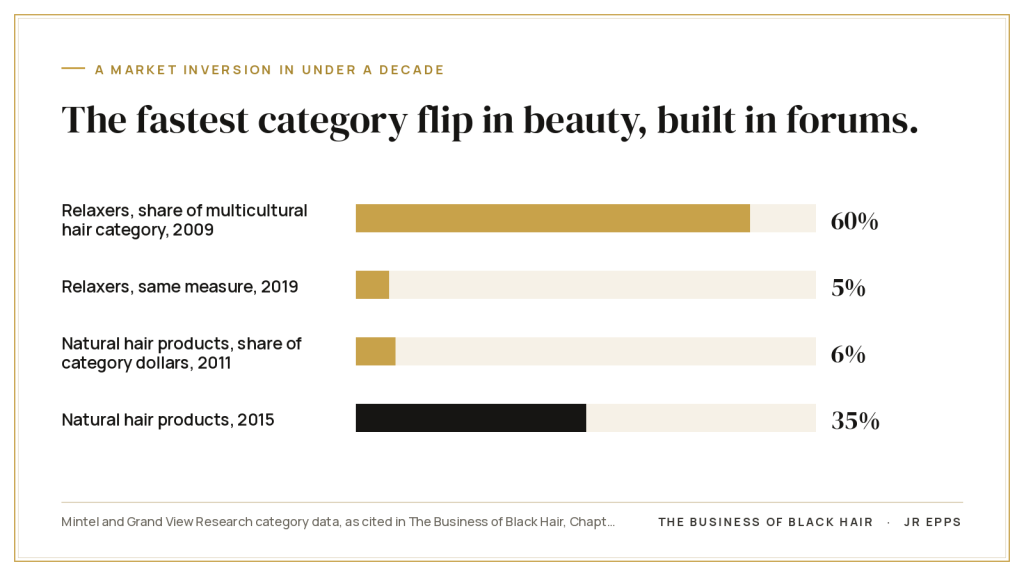
ReadIn 2009 chemical relaxers were 60% of the multicultural hair category. By 2019 they were about 5%. The community did the R&D for that shift in forums, for free, years before any brand noticed.
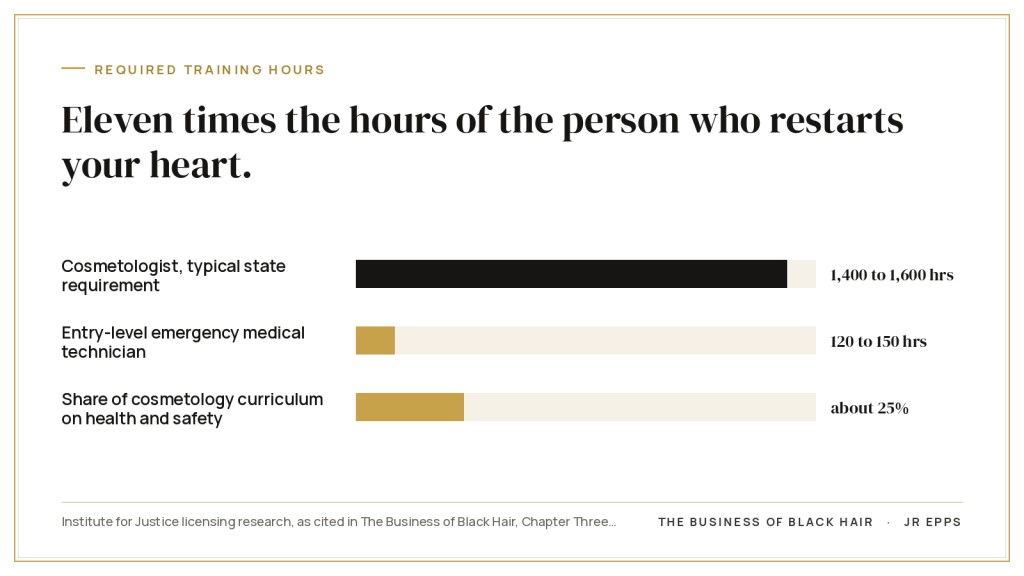
ReadA year of your life, $16,000 in tuition, and a starting salary of about $26,000. Cosmetologists are required to train eleven times longer than entry-level EMTs. Then the curriculum skips the hair.
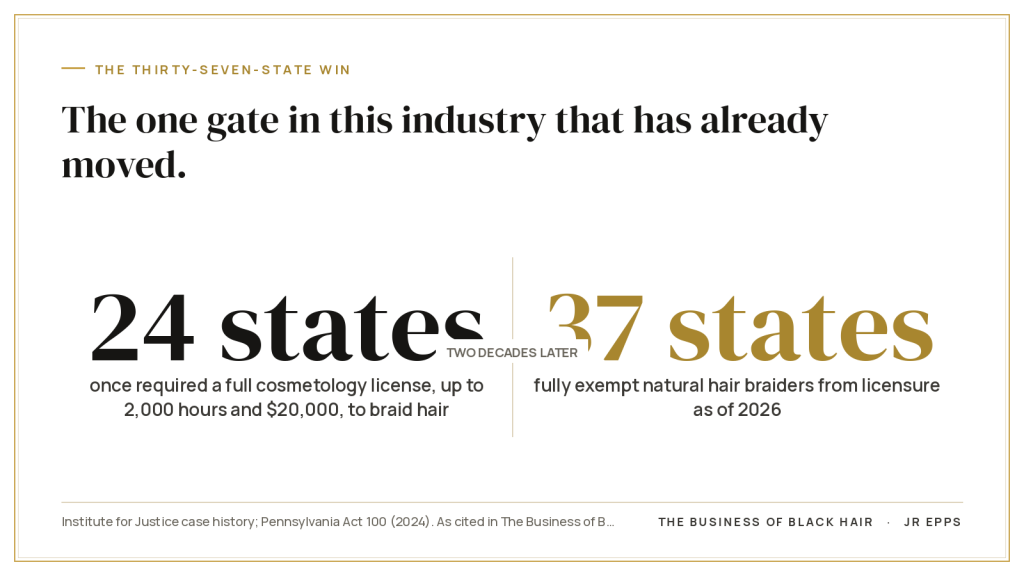
ReadBraiders were once required in 24 states to spend up to $20,000 on schools that did not teach braiding. Today 37 states exempt them entirely. The gate moved because the people it blocked organized around its mechanics.
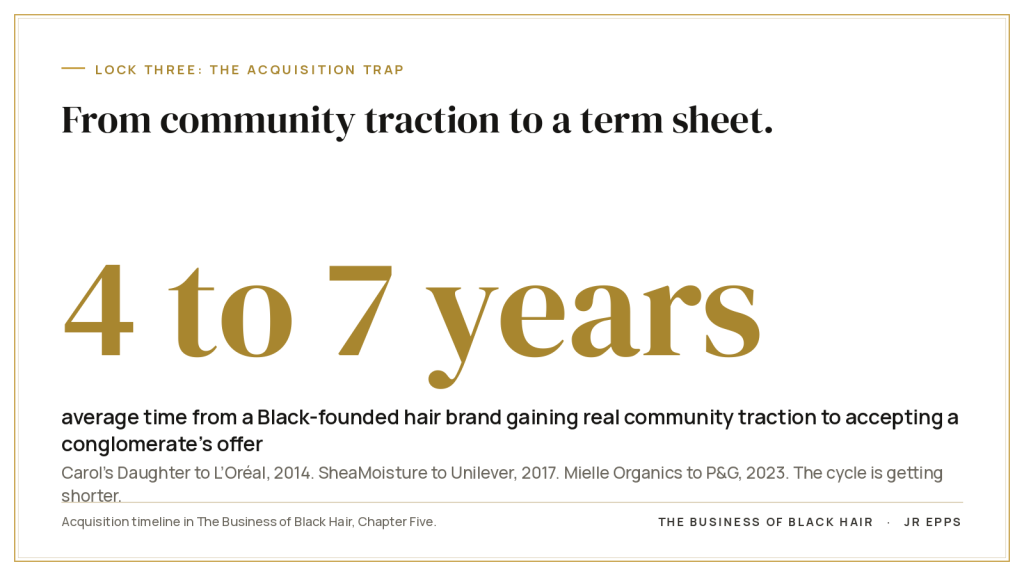
ReadCarol’s Daughter, SheaMoisture, Mielle. Same five acts every time: community builds the brand, brand reaches scale, conglomerate buys it, the product changes, the community leaves and finds the next one.
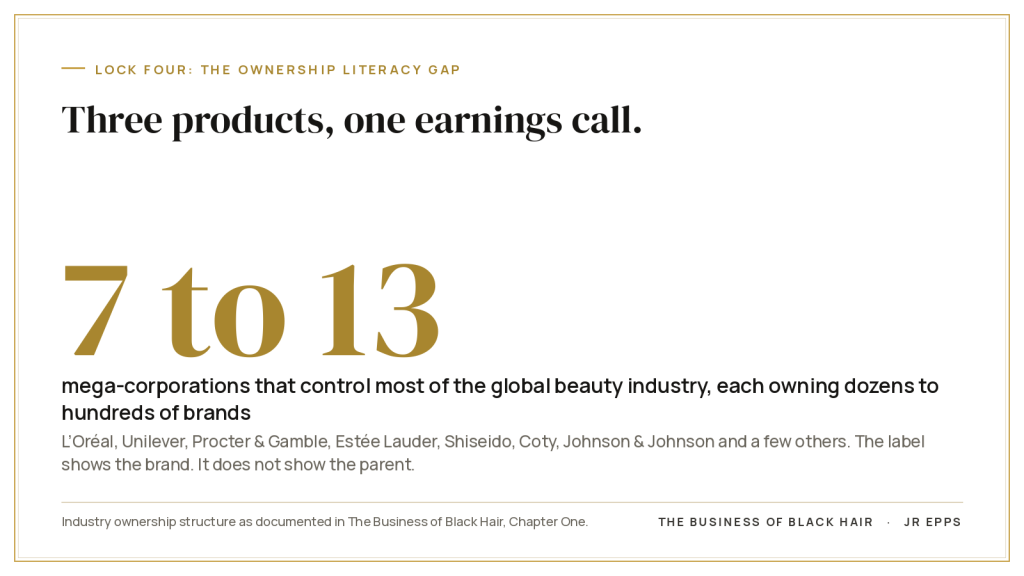
ReadThe label says SheaMoisture. It does not say Unilever. Most of the beauty industry reports to a handful of conglomerates, and the packaging is designed so you never have to ask.
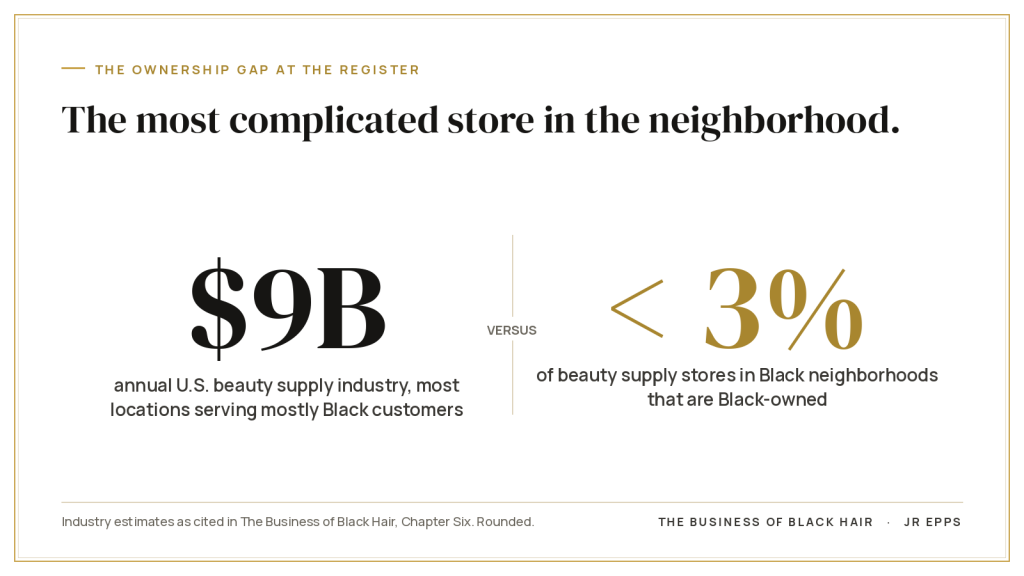
ReadThe beauty supply store is the most visited and least discussed institution in Black hair care. The tension is real. The diagnosis is usually wrong. It is a business operations problem, not a neighborhood problem.
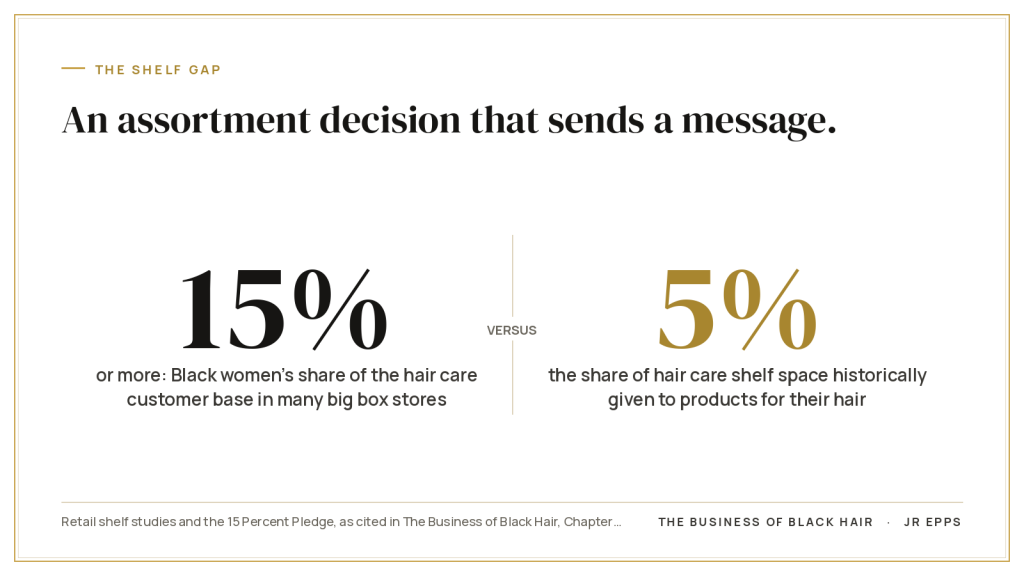
ReadBig box retailers brag about their Black customers in shareholder decks and allocate them a fraction of the aisle. Then they call the sales data from the short shelf "category performance."
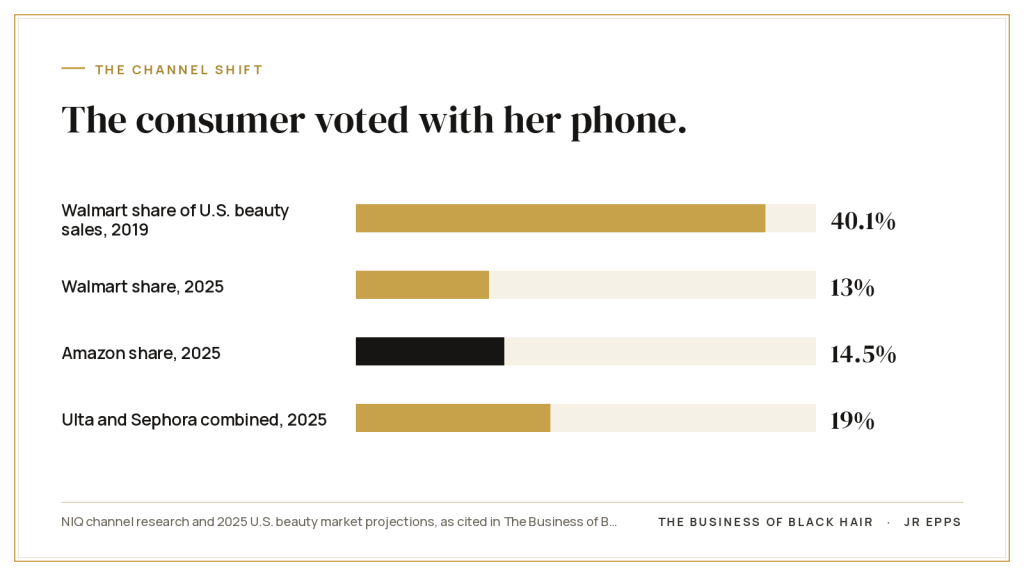
ReadIn 2019 Walmart held 40% of U.S. beauty sales. By 2025 it was 13%, and Amazon passed it. The Black beauty consumer voted with her phone, and the physical shelf lost the election.
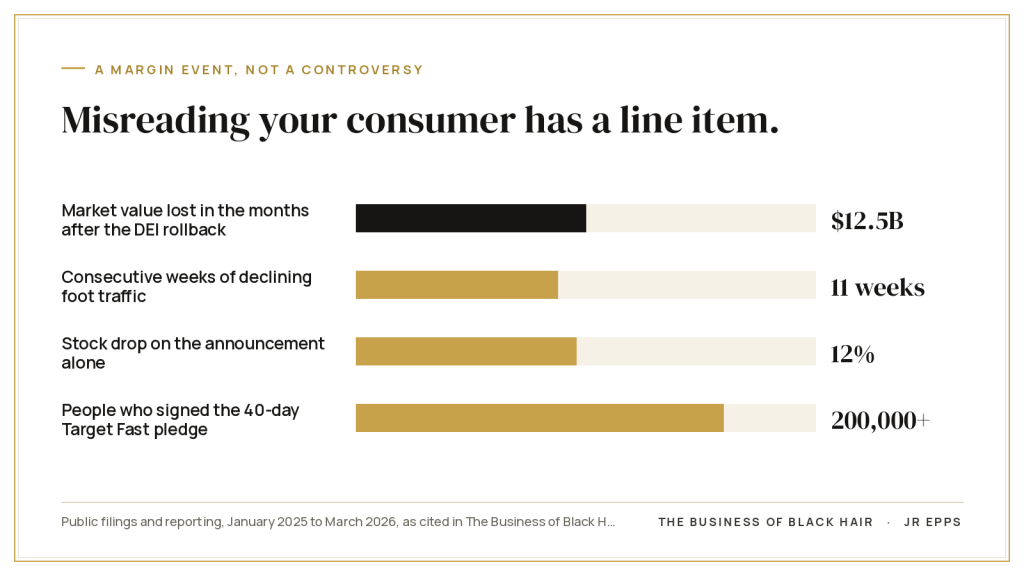
ReadTarget did not stock Black-owned brands because of DEI. It stocked them because Black customers bought them. When it canceled the story under political pressure, it told its best customers the relationship was never real.
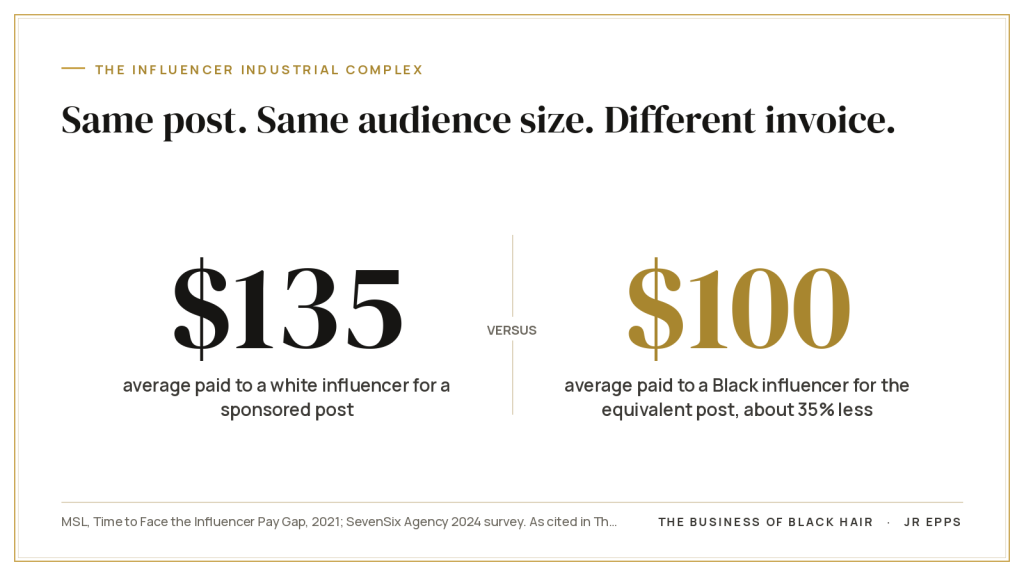
ReadBlack women built the natural hair tutorial economy on YouTube before influencer marketing had a name. In the $24 billion industry that grew on top of it, they are paid about a third less than white creators for equivalent work.
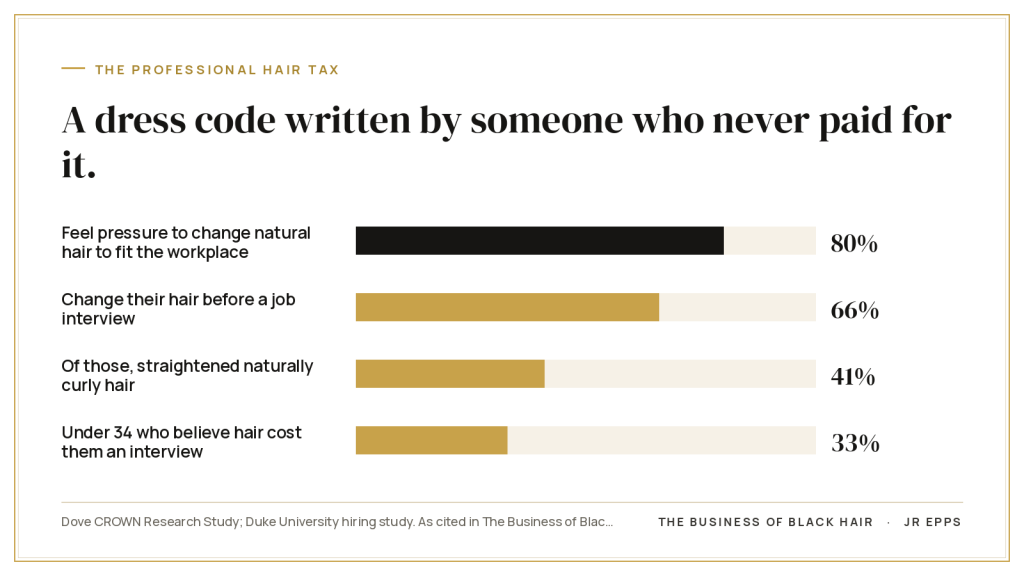
ReadThere is a Professional Hair Tax, paid in time, money and chemical exposure, and it compounds with the Afro Tax. The system charges her to have her hair, then charges her again to change it.
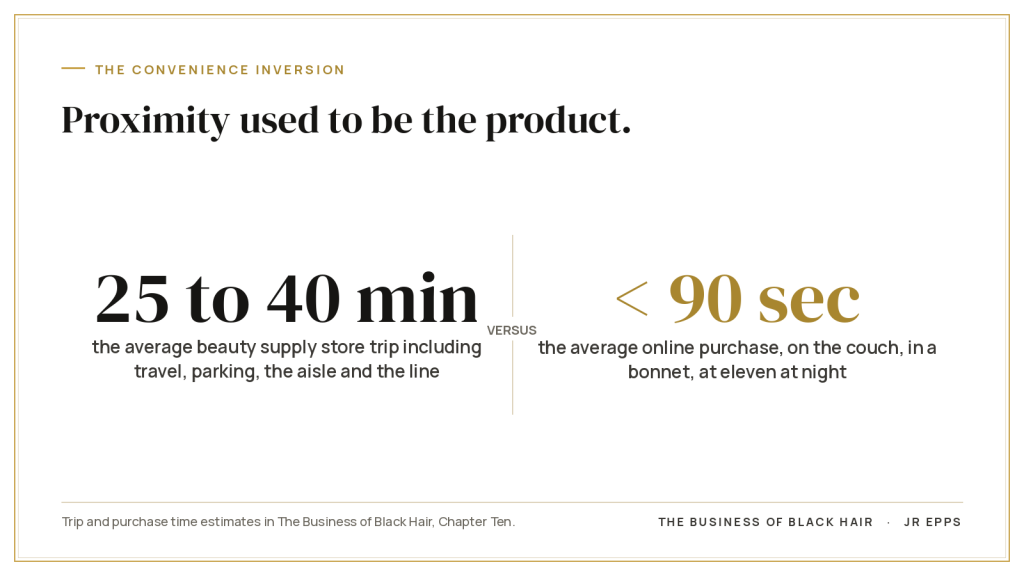
ReadFor forty years the most valuable asset in Black hair retail was a lease six blocks from the customer. The lease is no longer the moat. The book coins a term for what replaced it.
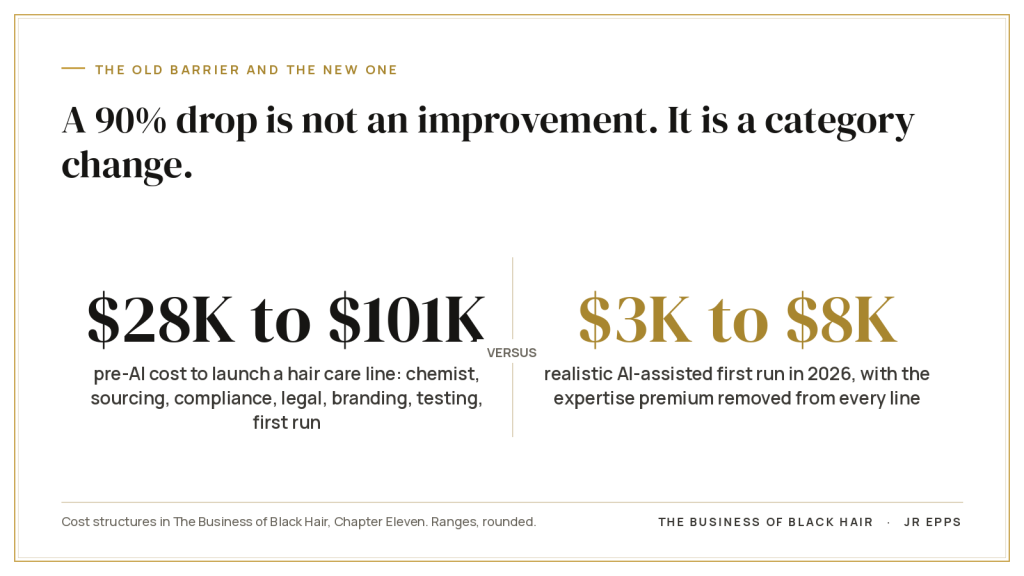
ReadLaunching a hair care line once took seven paid specialists and $28,000 to $101,000 before the first unit shipped. With AI doing the knowledge work, a realistic first run is $3,000 to $8,000.
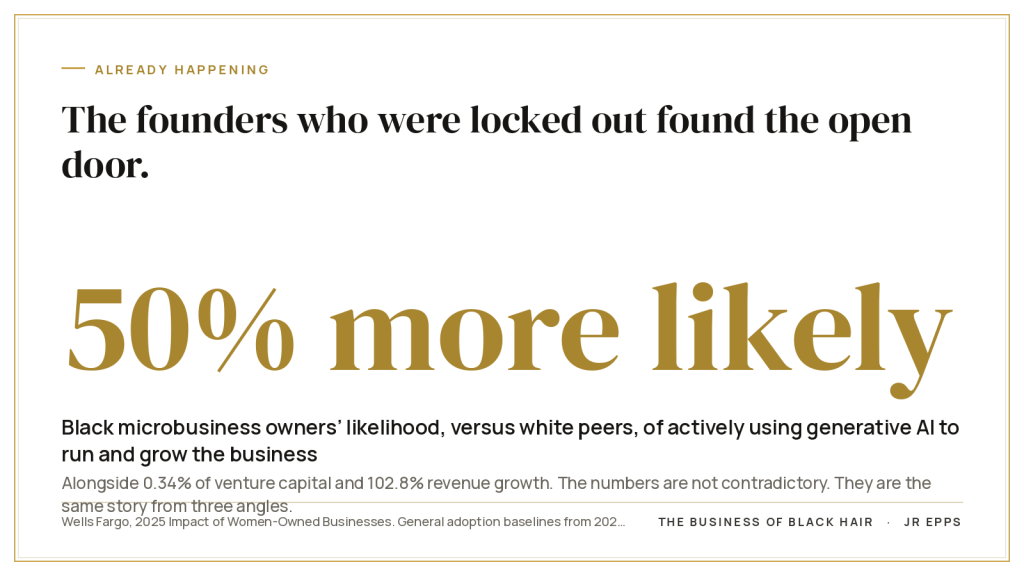
ReadWomen adopt generative AI at lower rates than men. Black women microbusiness owners adopt it faster than anyone. That is not enthusiasm for technology. It is what you do when the other doors are locked.
Read