
If someone pitched you a business that required $16,000 up front, a year of your life, and paid $26,000 a year on the other side, with less than a one-in-three chance of finishing on time, you would call it a bad investment. The cosmetology licensing system calls it a career pathway.
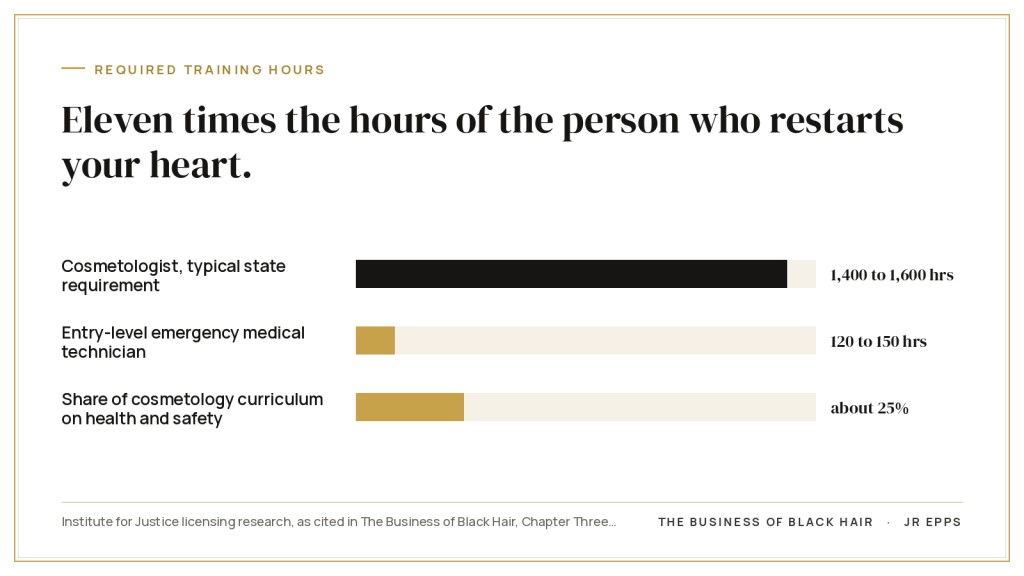
The numbers: the average program costs $16,000 to $17,000 and requires 1,400 to 1,600 hours of in-person training. The average graduate starts at about $26,000 a year carrying around $7,100 in student debt. Fewer than one in three students graduate on time. An entry-level EMT, the person who restarts your heart in the back of an ambulance, needs 120 to 150 hours. Cosmetologists are required to train eleven times longer.
Only about a quarter of what the schools must teach is health and safety. The rest covers services many stylists who specialize in Black hair will never perform. And for decades the schools whose certificate was the legal gateway to braiding did not teach braiding at all. Twenty-four states once required a full license, up to 2,000 hours and $20,000, to braid hair.
Follow the incentives. Required hours in each state match, almost exactly, the hours the schools in that state sell. More than 60% of students use Pell Grants. State boards are staffed by licensed cosmetologists and school owners. The people who profit from the hours sit on the board that sets the hours. The aspiring stylist is not in the room.
Root cause: a credential designed around the school’s revenue, not the stylist’s craft or the customer’s hair.
The Business of Black Hair treats licensing as one of the gates in the system, and the next post is about the one gate that actually moved.