
Hair care is not a stable category. It moves in product cycles, and each cycle has a winner. The hot comb era paid Black entrepreneurs, Madam C.J. Walker among them. The relaxer era paid conglomerates; Soft Sheen and Dark & Lovely went to L’Oréal in 1998. Then the fastest flip in the history of the category happened, and it is worth looking at who it paid.
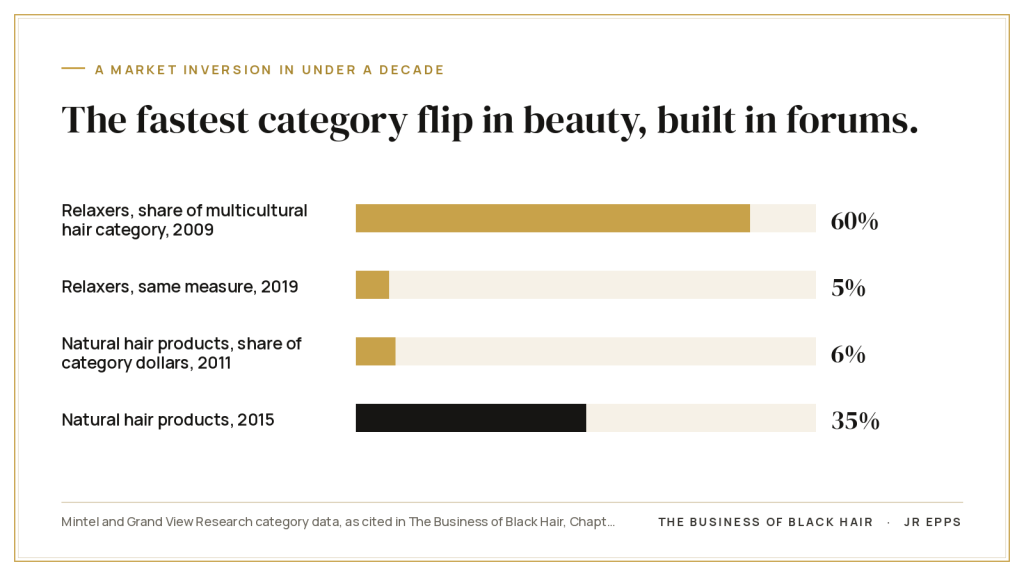
In 2009, chemical relaxers were about 60% of the multicultural hair category. By 2019 they were roughly 5%. Natural hair products went from 6% of category dollars in 2011 to 35% by 2015. U.S. relaxer sales peaked around $206 million in 2008 and have fallen every year since. A complete market inversion in under ten years.
Where did the shift come from? Not from a brand. From women in online forums, including the one I helped run, Black Hair Media, documenting the Big Chop, comparing deep conditioners by ingredient, testing moisture-protein ratios and warning each other about reformulations weeks before the press caught them. The forum word for relaxers was “creamy crack,” and it appears thousands of times in the archive, usually next to advice on how to quit.
The community did the research and development. It did it for free. By 2012 the movement was a billion-dollar opportunity, and by 2015 every major conglomerate had either acquired a Black-founded natural brand or launched a competing line. The community received cultural credit. The conglomerates received the upside.
Business lesson 101: in every other industry the people who do the R&D get patents, royalties or equity. Here the R&D department was a million women in forums, and their compensation was the privilege of buying the products their research made possible.
Root cause: the demand signal was public for years. Only one side of the market was positioned to capitalize it. The Business of Black Hair maps the cycles like a product roadmap, winners and losers included.