
In information technology there is a phrase for a system that works exactly as designed while producing results that look broken from the outside: functioning as intended. I spent twenty years saying it to users. Then I ran the numbers on the industry I used to help run, and it was the only phrase that fit.
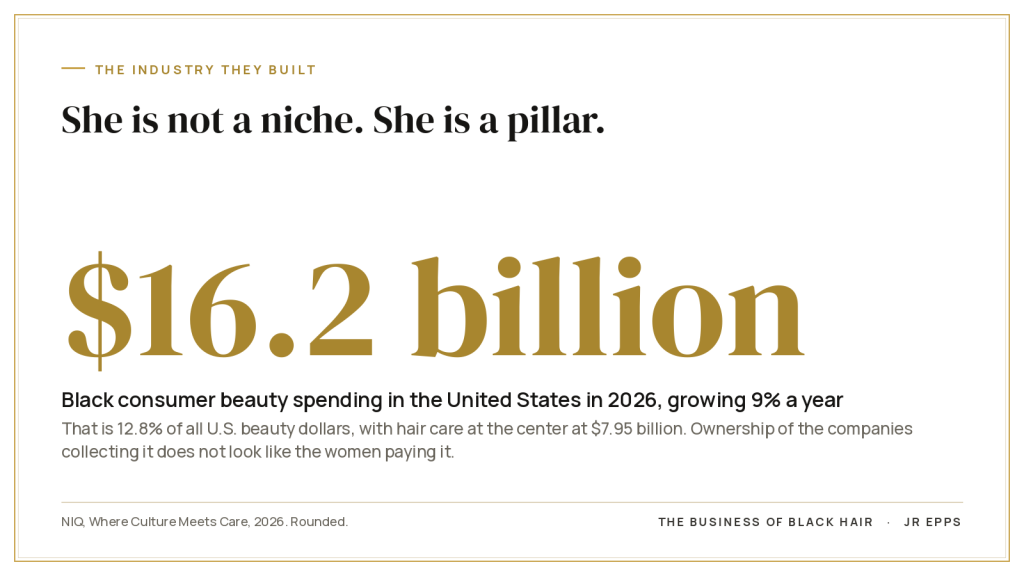
Black consumers spend $16.2 billion a year on beauty in the United States. That number grows about 9% a year, which is roughly $1.3 billion in new money every twelve months. Hair care sits at the center of it at $7.95 billion. Black women spend six to nine times more per person on hair care than any other group in the country. By every measure a Wall Street analyst uses, this is one of the most attractive consumer markets in America.
Now look at who owns it. The supply chain, the manufacturing, the distribution, the stores, and most of the products used every week. Almost none of it is owned by the consumer who created the demand, writes the reviews, teaches the techniques and performs the labor. In most industries the founding customer eventually becomes replaceable. In this one, if she walks away, the industry folds.
The Business of Black Hair calls that arrangement the Consumer-Owner Inversion: a market where the people who spend the most are systematically excluded from owning any of it. You will not find the term in a textbook. You will recognize it in the aisle.
Root cause: nobody had put the revenue number and the ownership number on the same page. Once you do, the pattern is not a feeling. It is a data point.
The rest of the series pulls that one number apart: where the dollars go, what the real cost is, and what finally makes the structure breakable.