
In IT there is a competitive strategy called embrace, extend, extinguish. Adopt the standard the community built, extend it with your own additions, then quietly replace the original once everyone depends on your version. Nobody in a beauty boardroom uses the phrase. The sequence is identical.
Here is the cycle, in five acts. A Black woman builds a brand from her kitchen because nothing on the shelf works for her hair. The community adopts it through forums, salons and group chats, not ad spend. Distribution expands, revenue crosses the line where acquirers notice, and the founder hits the capital wall described two posts ago. The offer arrives. The press release promises nothing will change. Then the formulation shifts for scale, the marketing widens to “everyone,” the price moves, and the community notices before any chemist confirms it. It leaves, finds the next kitchen-table brand, and a conglomerate starts watching that revenue curve.
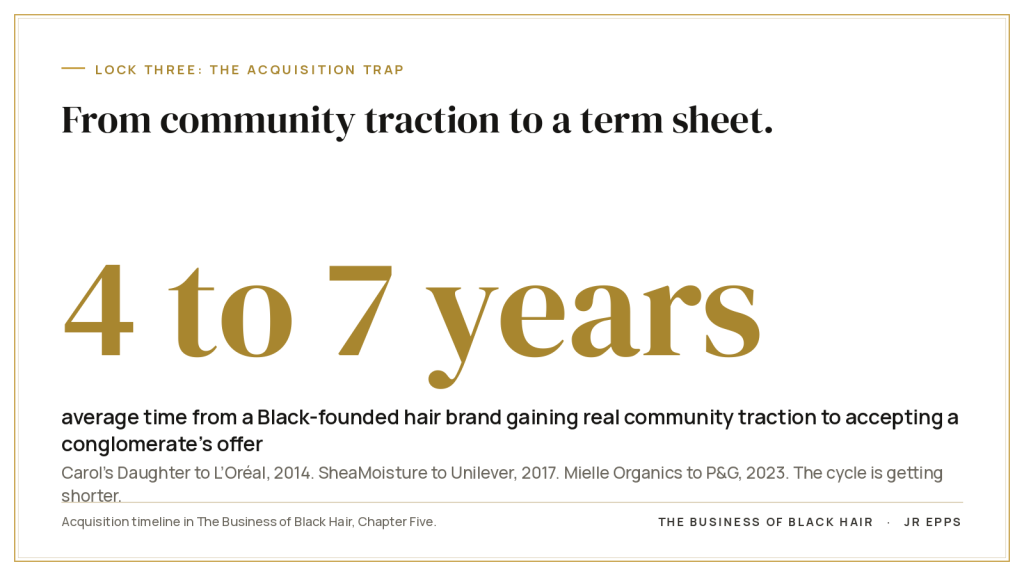
The timeline: Carol’s Daughter to L’Oréal in 2014 for an estimated $60 to $70 million, divested back to Lisa Price in 2025 as too small to bother with. Sundial, SheaMoisture’s parent, to Unilever in 2017, followed within months by reports of a changed signature smoothie. Mielle Organics to P&G in 2023, followed in 2024 by the most public Act Four the industry has seen. Average time from traction to term sheet: four to seven years, and shrinking.
The usual question is whether the founder sold out. Wrong question. Monique Rodriguez built a brand worth hundreds of millions with no institutional capital. When the choice is a guaranteed generational wealth event or more years in a capital-hostile market, selling is rational. Nobody asks a tech founder why she sold to Google.
Root cause: Lock One creates the pressure and Lock Three releases it. The right question is why the only path to that outcome ran through someone who does not look like the customer.
The Business of Black Hair puts the full timeline in a table, then spends its last four chapters on the alternative.