
This is not a post about politics. It is the textbook case in failed stakeholder analysis that every MBA program will be teaching in five years, and the numbers are already final.
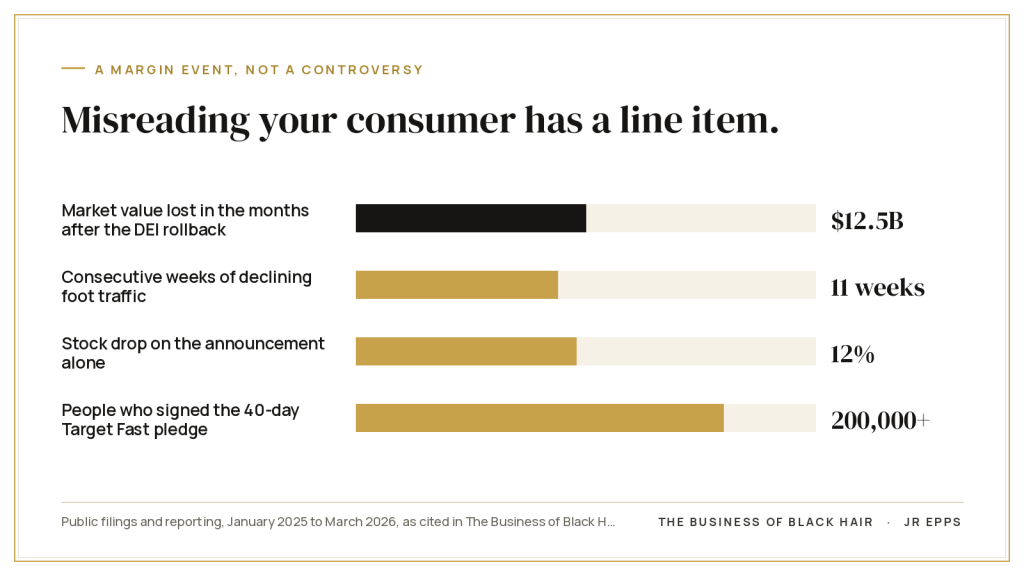
On January 24, 2025, Target rolled back its diversity commitments, including a $2 billion pledge to Black-owned suppliers. The response was immediate and measurable. The stock fell 12% on the announcement. Foot traffic declined for eleven consecutive weeks. More than 200,000 people signed Pastor Jamal Bryant’s 40-day Target Fast. Market value fell about $12.5 billion in the months that followed. By mid-2025 the stock was 61% below its 2021 peak, the company announced its first major layoffs in a decade, and the CEO was replaced. The formal boycott ended on March 11, 2026, with Target recommitting to the $2 billion.
Here is the part almost everyone got wrong, on both sides. Target did not stock Black-owned brands because of DEI. It stocked them because Black women walked in, looked for them and bought them at a rate that made the category one of the fastest growing in the store. There is not one Black-owned brand on a Target shelf that does not make Target money. DEI was the marketing story Target told about a relationship that was always transactional. When it pulled the story, its most loyal customers heard: it was never about you.
Business lesson 101: no company can do favors for a community. Stocking what your customers buy is not charity, it is inventory management. A grocery store does not do the neighborhood a favor by carrying milk. Frame commerce as charity and you give yourself permission to withdraw it, and the customer hears exactly that.
Root cause: a capital allocation decision made without consulting the company’s own customer data. In business, misreading your consumer is not a controversy. It is a margin event.
The deeper damage was not survival. It was that a forty-day boycott taught a large group of customers to build a new habit online, and habits do not reverse because of a press release. The Business of Black Hair covers what that habit looks like in the retailer’s quarterly report.