
Matchmaking used to be for people with a family office. Now it is a television genre. Love Is Blind, 90 Day Fiancé, Pop the Balloon with over a hundred million views, Kendra G running live matchmaking on Instagram. Whatever you think of the shows, the audience is telling you something: people are tired of sorting the pile themselves and would happily let someone else do the first pass.
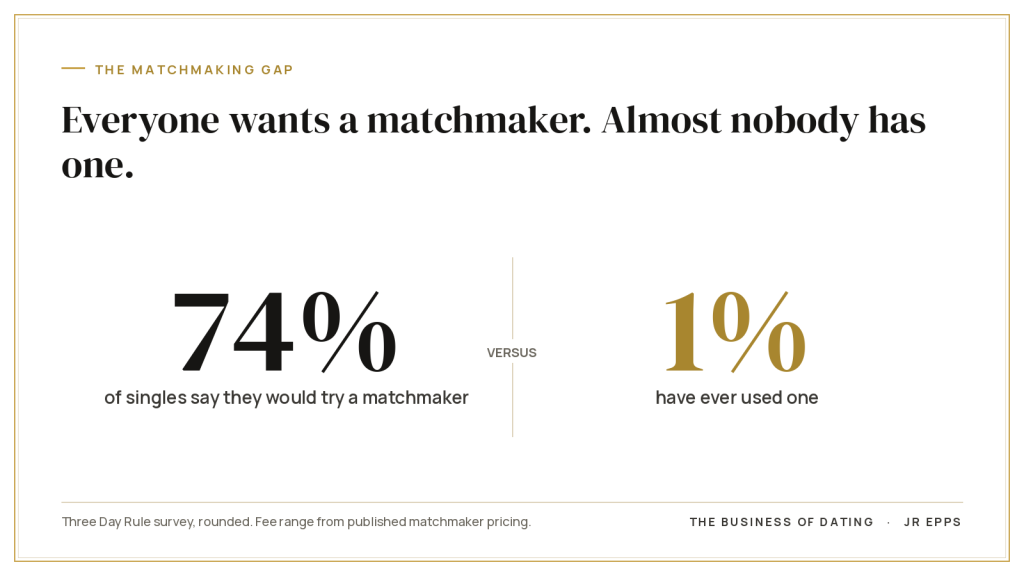
The numbers back it up. In one matchmaker’s survey, seventy-four percent of singles said they would try a matchmaker. One percent have. The reason is on the price list. Entry packages start around six thousand dollars and the serious ones run to fifty. So the service most people say they want is one almost nobody will buy.
Here is what a matchmaker actually does, stripped of the velvet rope. They sit you down and make you say what you need, out loud, in specific terms. They write it down. Then they screen people against it before you ever meet, so your first date is with someone who already passed. That is the product. The dinner reservations are decoration.
You can run that process yourself. Four lists: wants, needs, deal breakers, red flags. Needs get the vote. Screen before the date, learn during it, update the list after. Call it version 1.0 and treat it like a boss treats a hiring rubric, meaning you actually use it instead of overriding it the moment someone has nice forearms.
Root cause: you do not need a matchmaker. You need the matchmaker’s discipline, and that part is free.
The Compatibility Algorithm on JREpps.com is that discipline in a form you can fill out in fifteen minutes. Seventy-four percent would use a matchmaker. One percent can afford to. You just built one.